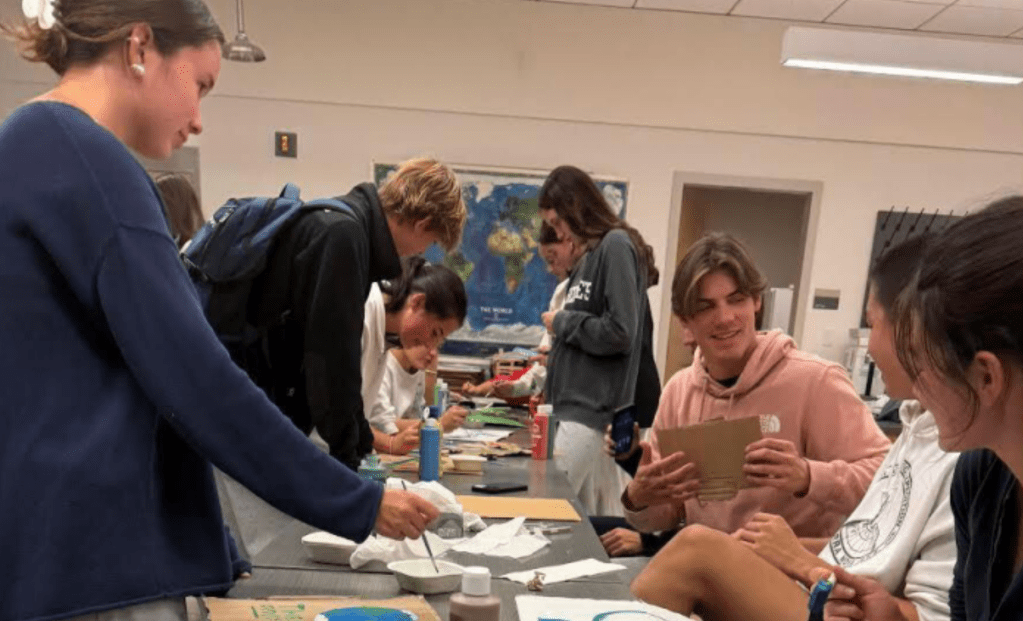
Preparation for this year’s Green Week started on October 12th in the Academic Building. Students gathered together to paint used cardboard boxes with images representing sustainability. These posters were displayed on the walls of the academic building to spread awareness about our earth and things we can do to keep it clean.
Monday, October 13th, marked the start of Green Week, with a day focused on recycling. The sustainability board helped spread awareness on ways we can produce less waste and reuse items. During assembly, tips were shared on what we can recycle and what we should throw in the trash. Many recyclable materials include our everyday paper and the boxes we receive from the mail center.
Tuesday, the 14th, was devoted to food waste. Students this year have already helped sustain and produce less waste from the new rules on food delivery. They have taken advantage of King Hall, and with all the food scraps we throw away, St. George’s staff work hard to compost food scraps. We can take action in the future and create fewer food scraps by only putting on our plates what we think we will finish. There will always be more food for once you finish your plate, but once touched, food cannot be put back. With what’s made to compost, simple compost consists of foods such as fruits, vegetables, bones, meat, dairy products, grass clippings, and more. If making compost at home to have some nutrients you can add to your garden, make sure not to include things like pet waste, diseased plants that have seeded, or charcoal ash.
Wednesday, the 15th, focused on St. George’s students’ ecological footprint. Meaning the amount of resources we use on an everyday basis that impact the Earth. Things such as constantly purchasing new items or doordashing, create problems for our land when we do too much. When food delivery drivers have to constantly come to St. George’s, their cars create pollution. Things like taking excessively long showers can use up unnecessary amounts of water. Using too much of our Earth’s clean water will create problems in the long run, so it’s important to be aware of our actions because when added up, a small issue can turn into a larger one.
Thursday, the 16th, had an event scheduled at night to make bracelets using recycled plastic beads. By bringing the community together to do a simple activity, spread awareness about the importance of Green Week. By using sustainable beads, students saw that we can still create new things by using much more eco-friendly materials. It is important to remember that fun activities, like bracelet making, have more sustainable options. Next time you want to try a new craft, try to look for a more eco-friendly option!
On the last day, Friday the 17th, was Sustainable Fashion Day. Our sustainability board aimed to focus on overconsumption and how our constant desire to have more can still be eco-friendly. Many local thrift stores hold amazing items that can be almost new. Not only does this help the environment, but it also helps elevate our dress code. The closest second-hand store we can find at SG is our amazing Swap Shop. Heads of Sustainability kept the Swap Shop open for the entire length of Green Week, and from Monday to Friday, almost all items that had been donated found new homes. Not only can we save money by visiting the swap shop and picking up a few items, but we can also make a bigger impact on our environment by spreading awareness of buying second-hand.
Throughout the week, the Sustainability Board capitalized on the importance of helping our environment. Even though Green Week was just five days, it is vital to understand how our presence on this earth has an impact. We need to focus on these pillars of Sustainability, as well as many others, every day. Be aware of our actions and how little things can add up. Remember, next time we want to order new clothes or take a long, long shower, that we only have one Earth, and we have to strive to protect it the best that we can.




 The Red & White
Leave a comment